Wednesday, February 26, 2014
Artifacts of WWII Enola Gay B-29
The Enola Gay B-29 was designed to fly in European theaters but some how ended up all the way in the pacific delivering a variety of bombs, including conventional bombs, incendiary bombs, mines and finally even a nuclear bomb. The Enola Gay dropped the first Atomic Bomb in WWII on August 6, 1945 on the city of Hiroshima, Japan. It then flew support for the second bomb dropping in Nagasaki, Japan. There where twelve American pilots on that flight. The plane was manufactured by Boeing in Nebraska, and now rests in an annex hangar to the National Air and Space Museum. Its controversial past prevents it from being displayed in the normal museum.

Alternative Label #1: Enola Gay
Post your museum label here as a comment by end of day, Wednesday, February 26.
Monday, February 24, 2014
Stephanie's Article posted week of February 24th - 28th
Hello all, I am posting the weekly article, and I came across this 60 Minutes section, the video is only about thirteen minutes long. Here's the link:
http://www.cbsnews.com/news/art-forger-wolfgang-beltracchis-multimillion-dollar-scam/
My response is in question to the Van Gogh that was on display in the Nevada Museum of Art late this past year. I had come to the conclusion after having visited the painting and read the evidence supporting or disclaiming the work as being authentic, that the Van Gogh was in fact a fake. I think that my point is backed up by this 60 minutes video, but please tell me what you think!
Here's a link to the controversy surrounding this Van Gogh self-portrait:
http://guardianlv.com/2013/07/nevada-museum-of-art-and-the-controversial-study-by-candlelight/
Imagery from Vincent van Gogh's self- portraits, beginning with the controversial one on top:

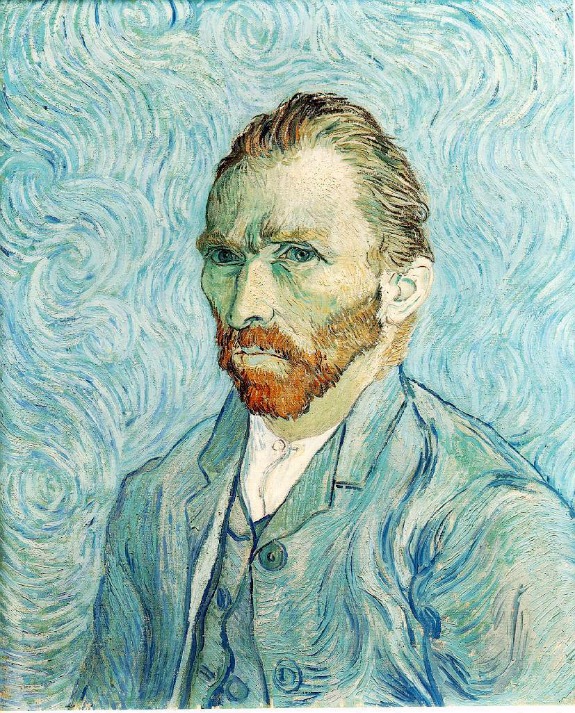
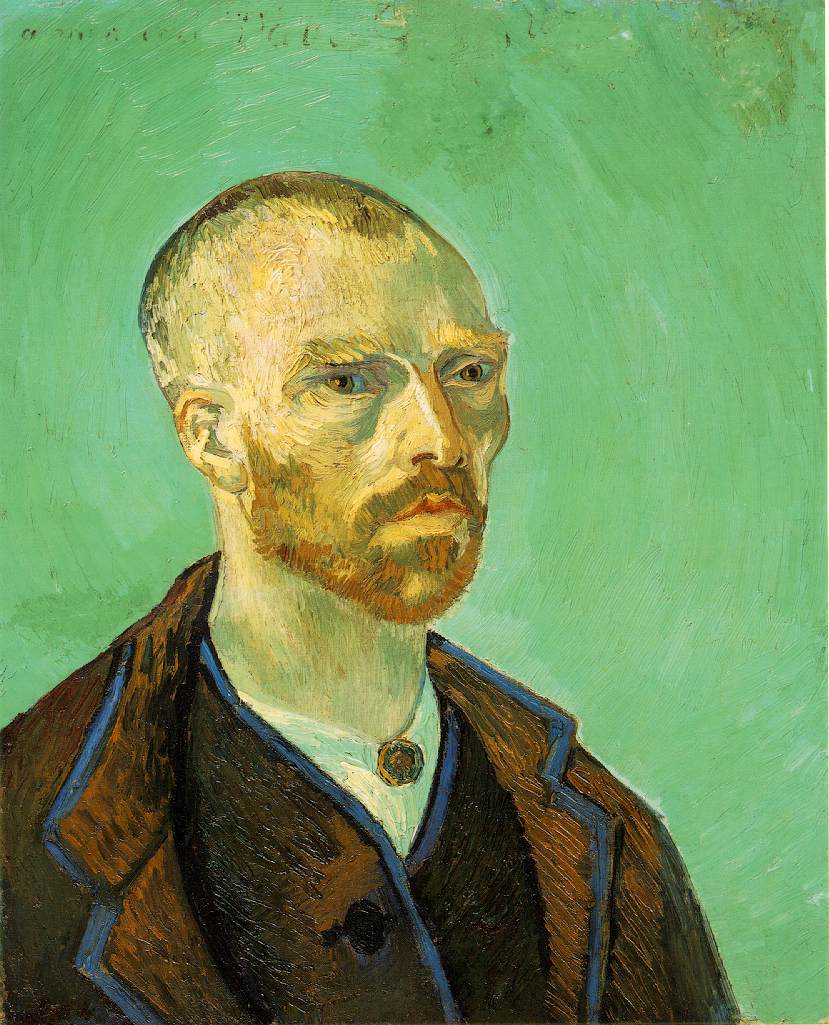
REAL OR FAKE???? WILL WE EVER KNOW????
http://www.cbsnews.com/news/art-forger-wolfgang-beltracchis-multimillion-dollar-scam/
My response is in question to the Van Gogh that was on display in the Nevada Museum of Art late this past year. I had come to the conclusion after having visited the painting and read the evidence supporting or disclaiming the work as being authentic, that the Van Gogh was in fact a fake. I think that my point is backed up by this 60 minutes video, but please tell me what you think!
Here's a link to the controversy surrounding this Van Gogh self-portrait:
http://guardianlv.com/2013/07/nevada-museum-of-art-and-the-controversial-study-by-candlelight/
Imagery from Vincent van Gogh's self- portraits, beginning with the controversial one on top:
REAL OR FAKE???? WILL WE EVER KNOW????
Sunday, February 23, 2014
Inside the Army's Spectacular, Hidden Treasure Room
Here's a cool link that shows how they store works of art and military artifacts inside the Center for Military History.
Inside the Army's Spectacular, Hidden Treasure Room
Inside the Army's Spectacular, Hidden Treasure Room
Wednesday, February 19, 2014
Rape of Europa
This film impacts
Art History to a large extent. World War Two is the biggest war to date. Everyone
knows the story of the intense gun battles going on all across Europe. But not
too many know the story of Hitler and the Nazi party stealing cultural art and
keeping it for themselves. The Rape of Europa tells the story of World War Two
from the art’s perspective. The movie goes into depth about Hitler’s plans of
opening a grand museum using stolen art from cultures all across Europe.
The film helped me
realize the struggles that people had to go through, in order to keep art with
cultural value safe from the Nazi’s. It blows my mind that paintings that did
get stolen are still extremely valuable to that country, even today. There are
legal battles still being fought to whom the stolen art belongs to. It’s hard
to believe that a country who stole a piece of art from another country, will
not give the art back after all these years. It goes against our moral code.
The art is being kept as a trophy of a serious event that happened in the past.
These paintings were highly valued paintings during the time of the war. These
paintings were on Hitler’s target list because of the value and status that
they carried.
Another reason why
this topic is a great topic of Art History because of how sought after the
paintings were. Hitler had plans of what countries he was going to take over,
and attached to those plans were plans for which cultural pieces were to be
stolen for his museum. The means of getting ahold of theses pieces were to
destroy entire cities block by block. Eliminating anything that had to do with
the culture of whom lived there. He was ultimately killing off entire races in
order to be supreme.
The really cool
part of World War Two and how Art History was involved was that the U.S. Army
had troops that were in charge of protecting the Cultural Artifacts of these
countries that were getting attacked by Hitler. The U.S. knew that these
artifacts were extremely important to the people. They made sure that bombs
were not dropped on structures that were of cultural value. This won the hearts
of a lot of the countries. The sector of the army that was involved in this was
called the Monuments Men. These guys were going to battle zones and finding art
that was hidden and returning it back to the owners. Towards the end of the
war, the Monuments Men were in charge of hunting down the large stashes of art
that were stolen for the Generals of the Nazi party and even for Hitler
himself. The Monuments Men were slowly finding the stashes of paintings stolen
from galleries all across Europe. The Monuments Men discovered all of the
Worlds famous paintings that I see on display today. Painting stolen from the
Louvre and paintings that were slowly stolen away by Gurrings were discover and
returned back to France.
This movie was a
great movie. It really got me thinking about the history of the famous
paintings. It went into great depth of the stories that follow the world famous
paintings. It’s great to know that Holly Wood is taking a stab at Art History
and making a movie about it. I feel that this doesn’t happen often. Art is such
a big part of human life. It’s pretty cool that they are still making movies
about it. I look forward to going and seeing this movie very soon.
The Rape of Europa Film Review by Carly
I have previously watched films on the
concentration camps, and on Hitler and his generals, but this is the first film
that I have seen discussing how the art in each country was stripped from the
lands and its people. In Poland alone, almost 6,000 pieces of art is still
unaccounted for. The numbers are staggering. The Rape of Europa highlights on the devastation and cruelty of
WWII while commenting on the greed of the armies and their leaders, along with
the hardship of attempting to straighten out the details 70 years later.
I find it
fascinating how many different personas of Hitler there are in documentaries
and movies. I have previously thought that it was just different
interpretations of the same information. This film, paired with The Nazi Temple of Doom that was
released in 2013, is leading me to the understand that the basic root of the
difference is not in the interpretation, but in the fact that Hitler had a lot
of hate and greed within him. This hatred was not just directed at the Jewish
people, it was also directed in how people expressed themselves through their
art. In Hitler’s mind, he was the only person who could say whether the work
was “good” or not. I feel that it is a vindictive motivation directed at the
art world because he had previously been denied an entrance into a prestigious
school. Who else but a scorned bitter artist could call Matisse, Van Gogh and
Picasso “degenerate”?
This film did a
wonderful job of balancing the history with the impact that the war still has
on the art world today. The interviews from survivors and the monument men
added the human element that was needed in order to discuss a deeply
penetrating subject. However, I was disappointed by the last 15 minutes of the
film. Through the majority of the film I did not feel any biased nature to the
information being presented. It was educational, visual and a side of the story
that is not heard very often. It highlighted on how important it is to the
descendants of the victims and to the human world to find and identify the
missing works that had disappeared through the war. With the introduction of
Stalin’s Trophy Brigade, I feel that the true nature of the film was revealed.
The last few interview clips painted an image of the Russian people that was
reminiscent of Hitler and his greed. I understand that the film was created to
educate and make people aware of the staggering numbers of missing art objects,
but it didn’t need to take that direct of an approach in the conclusion of the
film.
Tuesday, February 18, 2014
The Rape of Europa Response
Stephanie Campbell
ARTH 480
02/18/2014
The Rape of Europa Response
This film,
or documentary, was very well organized, thanks to Lynn H. Nicholas, and the
many art historians that narrated the plots of time across the war. I enjoyed
the original footage from the instances that they would describe, and the
survivors telling their lives’ stories. I found it amazing how much art was
involved in the politics of the Nazi party, something that my high school
history classes definitely left out.
I recall
the discovery of Hitler having been an art student, and a rejected one at that,
and being astonished. It can blow you away to know what a leader like Hitler
has done to the world, but there is a strange negative feeling that arises from
the realization that he loved art and wanted to be an artist. That same goal that
I have for myself is something that I can understand to have resentment for in
not being acknowledged, however never to the degree that he took it. The world
somehow became a playground for the boys that grew up with severe insecurities,
and held a reign of power.
The
objectification of artwork as money-making history is already a practice that
museums could say practice sternly. However, if one is to be selfish, one is
selfish for their family or community. Hitler and his generals were labeled by
the works they had stolen in their private collection, and this is just
disgusting.
The
section on Deane Keller and the efforts he and the MFAA activists put forth are
much more interesting that the film of the monuments men, because Deane did
make such a difference just on his own, whereas in the Monuments Men, the group
effort was emphasized, which is strange considering their group was so small.
The
story of the Castle in Monte Cassino is horrendous in that the perspectives of
whether or not to attack due to a building and a growing number of bodies is
one thing, but not having clear Intel and getting frustrated and bombing the
only shelter in the enemy’s side is not a widely approved tactic either. The imagery
of the aftermath is more daunting than most other pictures I saw.
I
enjoyed the conclusion of the film, with the recovered works and return to
their rightful owners as a good end note. The number of missing or unrecovered
works is not quite specified, and though an estimate as to how much is gone is
not made, an approximation was a piece of information that I was looking
forward to hearing.
Subscribe to:
Posts (Atom)